


27/02/2025
Worker management through AI: Opportunities and risks for occupational safety and health
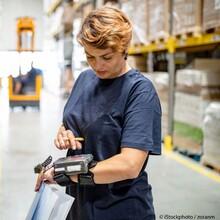
© iStockphoto / zoranm
Systems using algorithms or artificial intelligence for worker management (AIWM) are transforming workplaces by allocating tasks, scheduling shifts and monitoring and evaluating worker behaviour and performance. These AI-driven systems are increasingly being adopted across industries, impacting occupational safety and health (OSH) negatively if they are not properly designed, used and managed in order to prevent the risks to workers’ safety and health. Among the occupational risks introduced by AIWM, key concerns include for example reduced job control and autonomy, as well as increased work intensity, which are well-known risk factors of work-related stress in workers.
What is worker management through AI
Artificial intelligence and algorithm-based worker management systems (AIWM) are digital systems that collect and analyse real-time data on workplaces, workers and tasks to make automated or semi-automated decisions regarding work scheduling, task distribution and/or performance evaluation. In general, this technology is mainly designed to optimise workflow productivity and/or decision-making in relation to work and workers.
AIWM is implemented across various sectors, including warehousing and logistics, manufacturing, healthcare, professional cleaning, retail, customer service and banking. For example, in warehouses and logistics, AIWM optimises picking routes and task assignments to reduce inefficiencies. In retail and customer service, it predicts foot traffic and schedules shifts accordingly. The banking sector has also adopted AI-driven performance monitoring, using tracking software to measure worker activity levels, such as time spent at desks or on breaks, the number of tasks performed, and the time needed to do so. While these applications enhance efficiency, they also raise concerns about workers’ safety and health.
Risks and concerns of AIWM for OSH
AI-driven worker management introduces several risks, mainly of a psychosocial nature. Work intensification and performance pressure, where workers are pushed to maximise productivity through reduced breaks and continuous performance tracking, can lead to stress and burnout as well as to a higher risk of work-related accidents, injuries and musculoskeletal disorders. Likewise, reducing workers’ autonomy and control by dictating work schedules, task assignments, giving instructions on how to perform these tasks and setting performance expectations leaves them with little decision-making power over how to do their work, which can lower job satisfaction and negatively impact mental health.
Additionally, automated management systems can contribute to social isolation and dehumanisation by reducing human interaction, weakening workplace relationships and increasing feelings of loneliness. For instance, AIWM systems limit (or even replace in some cases) the role and support that workers typically receive from their supervisors, thereby exacerbating stress, as supervisors play a key role in mitigating the negative effects of high-demand, low-autonomy jobs.
As AIWM collects extensive data on workers, it also raises privacy concerns and can diminish trust between workers and employers. In addition, since these AI systems rely on historical data, they may contain biases that could result in workplace discrimination. Poorly designed AIWM can lead to unfair task assignments, unsafe working conditions, excessive workloads and biased performance evaluations.
Potential opportunities
AIWM also presents potential opportunities for workplace safety and health when designed and implemented responsibly. Paradoxically, depending on how it is used, AIWM may help managing these psychosocial risks: by analysing work patterns, AI-based systems can identify early signs of stress and burnout, allowing managers to intervene and manage the risks before issues escalate.
AIWM may also help adapting work tasks and schedules to workers’ skills and characteristics and therefore minimise the risks to their safety and health. This can be particularly beneficial in high-risk sectors like healthcare and transportation. Such an approach could be especially valuable for certain groups of workers with specific needs, like older workers or those recovering from or working with certain health issues, ensuring their workload aligns with their capabilities.
When implementing AIWM, OSH prevention is crucial to balance productivity gains with worker safety, health and wellbeing.
- Take a look at all content related to this priority area, worker management through AI.
- #EUhealthyworkplaces continues on LinkedIn, Facebook, X and Bluesky.